Cost-Plus vs Fixed Price: Which Contract Is Better for a Custom Home?
Quick answer
A fixed-price contract gives you one number up front and the builder keeps whatever they don't spend. A cost-plus contract means you pay the documented cost of construction plus an agreed builder fee, and you see the invoices. Fixed price feels safer and shifts risk onto you in ways you can't see. Cost-plus costs the builder money when he cuts corners, which is the whole point. We build cost-plus. Here's the honest case for both, including where ours isn't perfect either.
The part nobody explains
Under a fixed-price contract, the builder gives you one number for the whole house. If he brings it in under, he keeps the difference. If he goes over, he eats it.
Read that again, because it's the whole thing. Under fixed price, every dollar your builder does not spend on your house goes in their pocket.
That is not a moral failing. It's arithmetic. It's how the contract is built. And it means that on the day your builder is standing in your unfinished bathroom deciding between a Schluter waterproofing system and a cheaper pan liner, the contract is quietly pushing him one direction. You will never know which he chose. The tile goes on top either way.
Under our contract, that same decision runs the other way. Our fee is a percentage of construction cost, so installing the cheaper pan liner would pay us less, not more. We do not make money by cutting corners in the parts of your house you can't see. That is the single most important thing a contract can do.
Allowances sit outside our fee entirely. Cabinets, tile, countertops, fixtures, appliances. Upgrade any of it and we earn exactly the same, so nobody at this company has a reason to push you toward a more expensive countertop or steer you away from one.
Where our contract isn't perfect either
We'll be straight about this, because you'd find it out anyway.
Our fee is a percentage of construction cost. If your project costs more to build, we get paid more. That's true of essentially every cost-plus contract in this business, and anyone telling you their incentives are perfectly neutral is selling you something.
So here's what actually protects you, and it isn't our good intentions.
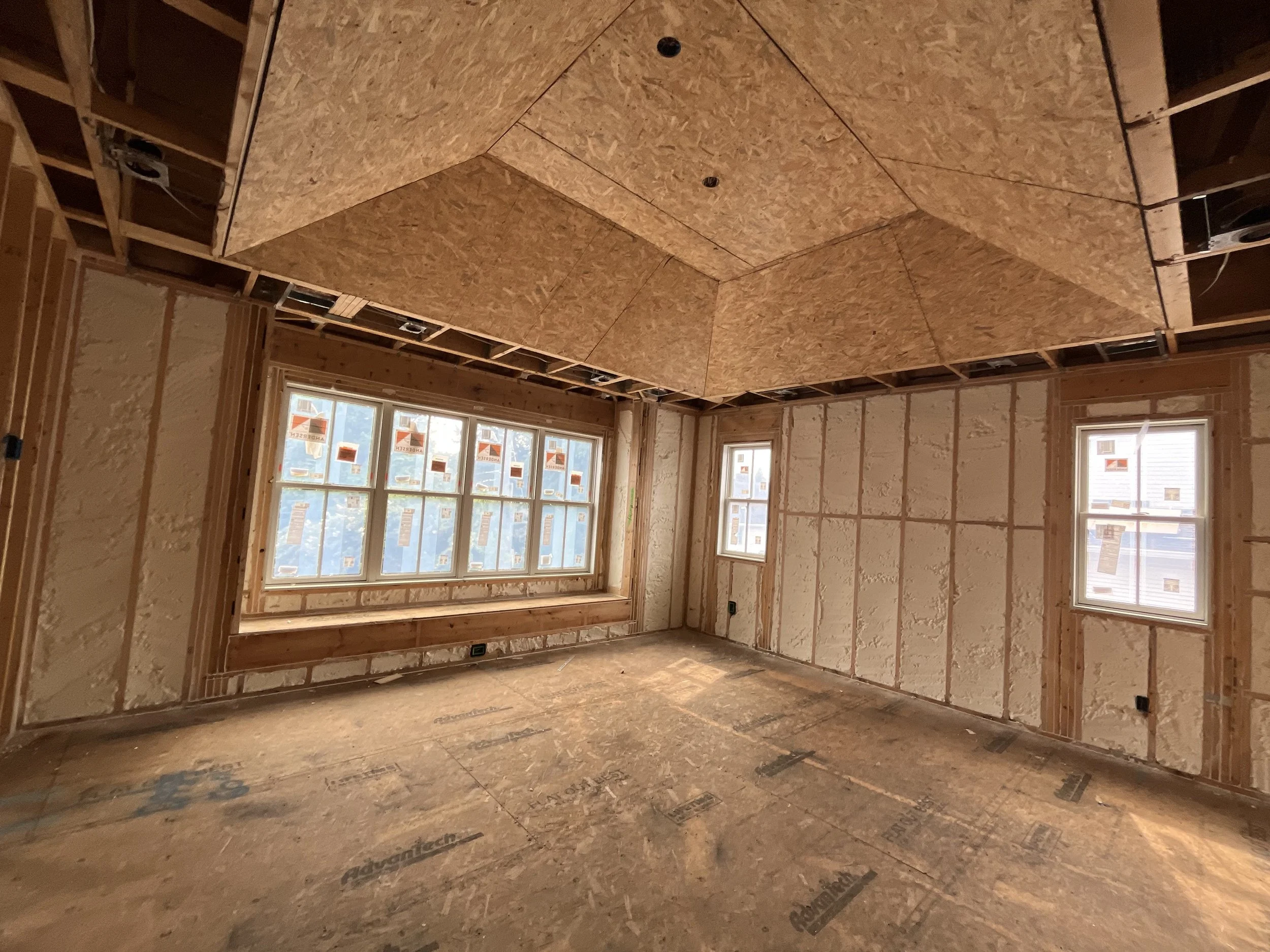
You see real costs at every draw, with invoices available on request. Scope changes are yours to approve, not ours to assume. The draw schedule is set at contract signing, before anyone has a reason to improvise. Our building standards are set to avoid warranty issues so construction material selections don’t change mid-build. And you get a complete pre-drywall photo record of every pipe, wire, and stud, so the work behind the walls is documented whether or not anyone's watching that week.
What fixed price is actually good at
We're not going to pretend it has no case.
Fixed price gives you certainty, and certainty has real value. If you need one number for a lender, or your budget genuinely has no room to move, a fixed-price contract answers a question cost-plus can't answer with the same confidence.
It also puts overrun risk on the builder. If the framing lumber costs 10 percent more than anyone thought, that's the builder’s problem under fixed price and yours under cost-plus.
The catch is that builders know this, so they price the risk in with a price escalation clause and a contingency. A fixed-price number includes a built-in contingency you don't see and don't get back. You're paying an insurance premium against overruns, whether or not there are any.
Where fixed price actually breaks down
Allowances. Fixed-price contracts handle selections with allowances: $32,000 for cabinets, $6,000 for electrical fixtures. Then you go shopping and discover $32,000 buys cabinets you don't want. Now you're in change-order territory, where pricing is set by one party after you're committed. Allowance markup is one of the quietest ways builders make money in this business.
Renovations. Fixed price on a renovation means the builder is guessing what's inside walls nobody has opened. They guess high, because they have to. On a Northern Virginia house built in 1945, that guess can be a very large number that you pay whether or not the surprises show up.
The relationship. Under fixed price, every unexpected condition is a negotiation, because someone has to absorb it. Under cost-plus, it's just a cost. We tell you what it is, you see the invoice, we move on. Nobody's arguing about who owns a rotted sill plate.
What to ask, whichever way you go
Ask what the fee is and how it's calculated. Fixed dollar amount or percentage, and if percentage, what it's a percentage of. Ask specifically whether allowances are inside or outside that base.
Ask whether materials and allowances are marked up, and whether builder discounts pass through to you or stay with the builder.
Ask how you'll see real costs during construction, whether invoices are available on request, and whether you'll get accurate cost-to-date information at every draw.
Ask what happens when there's an unexpected condition. Who prices it, and when do you find out.
A moment of candor
Cost-plus is harder to sell. Fixed price gives a family one number they can hold onto, and we lose bids to that number regularly. We know we're losing some of them to builders whose number is lower than ours because they intend to make it up somewhere we can't see.
We also lose bids because cost-plus asks you to trust us. That's a fair thing to be uncomfortable with, and we're not going to resolve it by telling you our incentives are perfect. They aren't. We're paid a percentage, and a bigger project pays us more.
What we'll say instead is that we hand you the invoices, we photograph the entire house before drywall goes up, allowances sit outside our fee, and both owners are on your job every week rather than a rotating project manager. If you don't believe those things, you shouldn't sign a cost-plus contract with anyone.
FAQs
Is cost-plus more expensive than fixed price?
Usually not, and often less. A fixed-price number includes a contingency for risk the builder is absorbing. If that risk doesn't materialize, he keeps it. Under cost-plus you pay actual costs, so an uneventful project costs less.
Can costs run away on a cost-plus contract?
They can if nobody's managing them, which is why the draw schedule and real-time cost reporting matter more than the contract type. We set the draw schedule at contract signing and show costs to date at every draw.
Is your fee a fixed amount or a percentage?
A percentage of construction cost, agreed before we start. We'll say the obvious thing about that: if the project costs more to build, we're paid more. What keeps that honest is that you see actual costs at every draw and you approve any change in scope before the work starts.
Do you charge your fee on allowances?
No. Our fee applies to construction costs. Allowances sit outside it. That means you can upgrade a countertop or a tile package without paying us more on top of the upgrade.
Doesn't a percentage fee mean you'd rather build something expensive?
On selections, no, because allowances are outside our fee. On overall scope, it's a fair question, and the answer is that scope is yours to decide and every cost is visible to you as it happens. It's also worth noting that cutting corners on cheap materials would pay us less, not more, which is the opposite of how fixed price works.
Do you pass along the builder discounts you get from vendors?
Yes. Our discounts with the vendors and trade partners we've worked with for years go to you at cost. Clients often pay less through us than they would at retail.
What happens if the project comes in under budget?
The savings are yours. Under fixed price they'd be the builder's.
If you have bids in hand and they're structured differently, we'll walk through them with you and tell you what to look for, including in ours.