How Long Does It Take to Build a Custom Home in Northern Virginia?
Quick answer
Plan on 14 to 21 months from your first meeting to your keys in hand. That breaks into 3 to 6 months of design and pre-construction, roughly 3 months of permitting, and 8 to 12 months of construction. If a builder tells you 12 months start to finish in Northern Virginia, they are either not counting permitting or they are counting from a set of plans that already exists. Neither is the timeline you're actually going to live.
| Phase | Custom home | Streamlined build |
|---|---|---|
| Design and pre-construction | 3 to 6 months | 3 to 4 months |
| Permitting and land disturbance review | About 3 months | 9 weeks |
| Construction | 8 to 12 months | 8 months |
| First meeting to keys | 14 to 21 months | About 14 months |
A streamlined build means selections are complete before construction starts, no major changes are made mid-build, the design is straightforward, and the lot has no complicated site conditions.
The three phases, honestly
Design and pre-construction: 3 to 6. This is where the house gets designed and priced at the same time. We join early, whether you bring your own architect or we introduce you to one, because the goal is to never let a design get finished without real pricing attached to it. Designs that get fully drawn before anyone prices them are the single most common way projects lose months. You end up redesigning, and the redesign costs both time and drawing fees.
Permitting: about 3 months. This is the honest planning number across Northern Virginia jurisdictions. In Arlington and Fairfax, permit review typically runs 9 to 12 weeks before construction can start. The variable is how many review cycles your plans require, and that depends on how complete the submission is.
You can't compress permitting by hiring a builder who "knows people." What a complete submission buys you is fewer review cycles, not a shorter calendar. On a standard lot with a good architect and civil team, 9 weeks is common. We still plan on 12.
Land disturbance is the piece people forget. In Arlington and Fairfax, stormwater review is triggered at 2,500 square feet of disturbance, and that threshold is easier to cross than you'd think. The review runs alongside building permit review, not after it, but an incomplete stormwater submission adds a review cycle the same way anything else does. An experienced civil engineer is a core piece of a smooth permitting process.
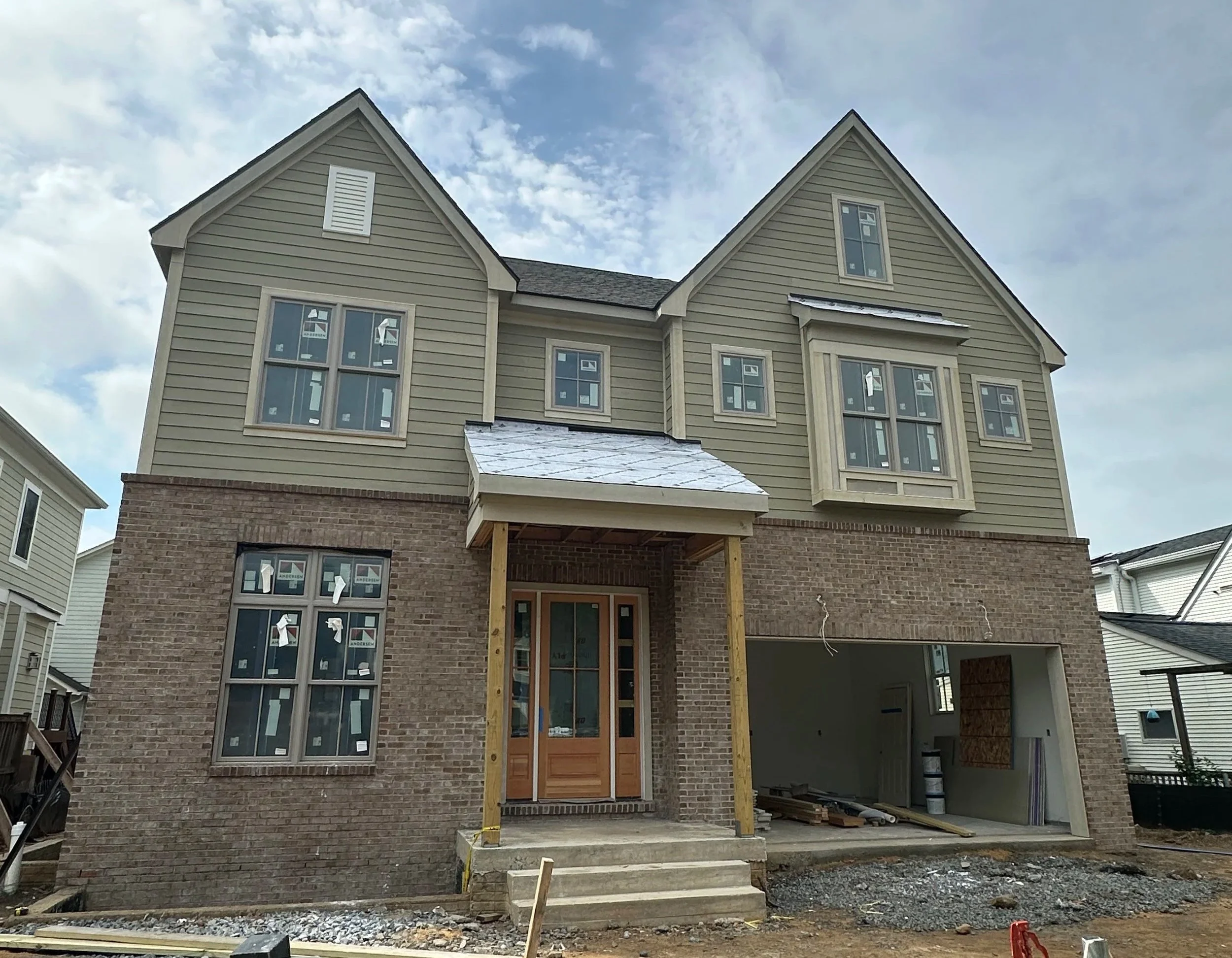
Construction: 8 to 12 months. The spread depends on size, structural complexity, and how the selection process goes. Selections are the part homeowners control most directly alongside a designer, but it’s the part that most often adds time. When all of the selections are decided before construction begins, no major changes are made, and the design is straightforward without complicated site conditions, it generally takes us 8 months to build a house.
What actually causes delays
Selections. This can be a timeline killer. If cabinetry, tile, plumbing fixtures, and lighting are changed or decided late, everything downstream waits. We give clients a selection schedule for exactly this reason. The best practice is to have everything decided before construction begins to avoid delays. The full sequence, stage by stage, is on our process page.
Change orders mid-build. Every change during construction has a schedule cost as well as a dollar cost, and the schedule cost is usually larger than people expect. Moving a wall in month six is not the same decision it was in month two. One change ripples through every trade behind it, and resequencing trades to absorb it isn't always possible. We believe it’s an integral part of a successful project to involve a builder during the design phase in order to accurately identify cost overruns, keep projects on budget, and avoid change orders down the road.
Long-lead materials. Windows in particular. If your design uses a specialty window package, that lead time needs to be in the schedule from the start, not discovered at framing. We order windows and exterior doors during the foundation stage to ensure there are no delays with extended lead times.
Weather, but less than you'd think. Northern Virginia weather affects site work and the exterior envelope. Once the house is dried in, it matters much less. Our schedules have built-in weather contingency periods because some bad weather is expected.
What doesn't cause delays for us. We build a deliberately small number of projects at a time, so your schedule doesn't slip because another job went sideways. It's Clayton or Christian on your project start to finish.
Why renovations aren't faster
People assume renovating is quicker because the house already exists. Often it's the opposite.
Demolition takes time. Working around existing conditions takes time. Smaller equipment moves less material per day. And the surprises inside the walls arrive on their own schedule, not yours.
A large renovation or addition runs on a similar clock to a custom home and can even take longer. Smaller renovations and additions can be done in six months or less. The existing house gets a vote on how long your project will take. If you're still deciding between renovating and starting over, here’s what we do on renovations and additions.
A moment of candor
We've lost projects to builders who quoted a shorter timeline than ours.
Some of those builders were counting from permit approval rather than from the first meeting, which is a real thing people do and it makes a twenty-month project sound like a twelve-month one. Some were just optimistic. Timeline is one of the things worth pressing every builder on. Here are ten more.
We'd rather tell you 14 to 21 months and have you plan your life around a number that's true. If you're selling a house, timing a school year, or carrying a construction loan, an optimistic timeline isn't a nice gesture. It's an expensive one.
FAQs
Can any of this be sped up? Design and selections, yes, and that's mostly on how quickly decisions get made. Permitting, no. Construction, only by simplifying the build.
When should I start if I want to be in by a specific date? Count back 14 to 21 months from the date you need to be in. If you already own the lot, the clock starts the day you start design. Working forward instead: 3 to 6 months of design and pre-construction, which depends on how quickly you make decisions and how complex the design is, then about 3 months of permitting, then 8 to 12 months of construction. Starting earlier costs you nothing.
How long do permits take in Arlington and Fairfax? About 3 months is the planning number. It varies with how many review cycles your plans go through. If you have a good builder, architect, and civil engineering team on a standard lot then 9 weeks is a fairly common permit review period. Our recent new builds have been 9 weeks of permitting, but one more complex project took 12 weeks. Good architectural plans often receive a Building Permit in 4 weeks, but it’s the cumbersome stormwater reviews that usually push the full permit life cycle to 9 weeks.
How long do permits take in Falls Church or Alexandria?Plan on about 3 months in all of them. Fairfax County covers McLean and Great Falls and runs on a similar clock to Arlington. Falls Church City and Alexandria are separate jurisdictions with their own review queues. What changes the number is how complete your submission is and whether your lot triggers stormwater review.
Is the timeline different in Washington, D.C.?Yes. D.C. permitting runs on its own process through DOB, and review timelines are laborious and longer than in Virginia. We're licensed in both and we plan D.C. projects on a D.C. timeline.
Do you build in phases so we can move in sooner? Not for a new custom home because you need all final approvals to receive your Certificate of Occupancy before moving in. On renovations and additions we are able to sequence work so a family can often stay in the house, depending on the scope of work. Also, for renovations and additions you likely already have a Certificate of Occupancy so if the house is livable the inspectors can’t stop you from moving in.
If you have a date you're working toward, tell us what it is and we'll tell you honestly whether it's realistic and when you'd need to start.